Office Clearance in London
If you are looking for Office Clearance in London, you may already be dealing with a tight deadline, a building move, an end-of-lease handover, or a workspace that needs to be emptied quickly and carefully. In a city as busy and varied as London, clearing an office is rarely as simple as removing a few desks. There may be basement storage, shared entrances, lift restrictions, loading bay rules, narrow stairwells, and very little time to spare. A well-planned clearance service helps you handle all of this with less disruption, less stress, and far more confidence.
London offices come in many forms. Some are modern commercial units in glass-fronted buildings, while others are converted townhouses, co-working spaces, studio offices, or long-established company premises in older business districts. Each type brings its own access challenges and clearance needs. A local team that understands the practical realities of working across the capital can make a real difference, especially when timing, access, and responsible disposal matter.
Whether you are clearing a single floor, a whole office building, a shared workspace, or a small back office above a shop, the aim is the same: remove what needs to go, protect what must stay, and leave the space ready for its next use. Contact us today if you want a service that is organised around your building, your schedule, and your business needs.
Why Office Clearance Matters for London Businesses

Office clearance is often needed for reasons that are practical rather than planned. A company may be relocating, downsizing, refurbishing, or closing part of its operations. In other cases, a landlord, facilities team, or managing agent may need a unit cleared between tenancies. In London, these situations are often complicated by shared access, limited parking, strict collection times, and the pressure to hand back a property in good condition.
Choosing a professional clearance service means more than simply moving furniture out of the way. It means handling bulky items, mixed office contents, archived paperwork, electronic waste, partition systems, shelving, and general clutter in a controlled way. It also means thinking about safety, access routes, and the impact on surrounding tenants, neighbours, and building staff.
For local customers, the value of a London-based service is in the speed and flexibility it can offer. A team working regularly across boroughs such as Westminster, Camden, Islington, Southwark, Hackney, Kensington and Chelsea, Tower Hamlets, and the City of London is better placed to understand how buildings operate, where access is tight, and how to plan a clearance without unnecessary delays.
Common reasons businesses book a clearance
Office clearance is usually requested when one or more of the following applies:
- End of tenancy and a need to return the premises empty
- Office relocation and a requirement to clear old furniture or equipment
- Refurbishment or fit-out work before contractors arrive
- Space reduction after restructuring or hybrid working changes
- Storage overflow from old filing, broken chairs, or unused desks
- IT and equipment replacement involving redundant items
- Estate management for landlords and managing agents between occupiers
If any of these sound familiar, it is worth arranging a proper assessment rather than trying to manage everything internally. What looks like a simple clear-out can quickly turn into a full-day disruption if staff are asked to sort, carry, and dispose of items while still trying to work.
What Our Office Clearance Service Includes
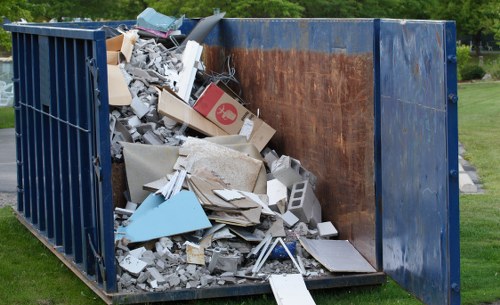
A reliable office clearance service should be able to handle a wide range of items and situations. In London, this is especially important because offices often contain a mixture of modern workstations, older filing furniture, storage cupboards, and specialist items that cannot simply be left on the pavement or abandoned in a storeroom.
The exact service will depend on the size and layout of the premises, but typical office clearance work can include desks, chairs, cabinets, screens, monitors, filing units, reception furniture, kitchen items, shelving, and general office clutter. Many customers also need help with commercial waste, archive removal, and careful segregation of reusable items, recyclable materials, and items requiring special handling.
Office clearance in London is often most useful when it is done in stages. That might mean clearing one department first, then moving through meeting rooms, storage areas, and communal spaces in a planned order. It can also mean working around building rules so the process stays efficient and compliant.
Typical items removed during an office clearance
- Office desks and workstations
- Task chairs, boardroom chairs, and reception seating
- Filing cabinets and storage cupboards
- Meeting tables, conference furniture, and breakout items
- IT hardware, monitors, printers, and peripherals
- Kitchen appliances and staff room furnishings
- Archived boxes, documents, and general clutter
- Partition panels, shelving, and selected fixtures
Important: if your premises contain sensitive material, hazardous components, or specialist equipment, it is best to raise that early. Some items may need additional care, separate handling, or a specific disposal route.
Clearance for different property types
London offices are not all the same. The service may need to be adapted for:
- Purpose-built office blocks with loading bays and service lifts
- Converted warehouses and loft-style creative spaces
- Townhouse offices with narrow staircases and limited frontage
- Retail units with office areas at the rear or upstairs
- Shared coworking spaces where access must be coordinated with other occupiers
- Small professional practices above shops or within mixed-use buildings
How Office Clearance Works

A good clearance process should be straightforward from the customer’s point of view. The aim is to reduce disruption, keep the work organised, and make sure nothing important is removed by mistake. In a city where office space can be expensive and time-sensitive, a clear plan is essential.
Most customers begin by explaining the size of the office, the type of items involved, the access conditions, and the timing they need. From there, a local team can decide how many people are required, what equipment may be needed, and whether the job can be done in one visit or should be staged over several visits. For larger premises, a pre-clearance visit or detailed conversation is often useful so the team knows exactly what to expect.
The best office clearances are not rushed. They are managed carefully so that items are removed in the right order, work areas remain safe, and the building is left tidy. That is especially important in London buildings where lifts, corridors, and loading areas may be shared or tightly scheduled.
Step-by-step service process
- Initial discussion about the office size, access, and items to be removed
- Planning around building rules, parking, lift availability, and timing
- Arrival and sorting of items to be removed, retained, recycled, or handled separately
- Careful removal of furniture, equipment, and waste without damaging the premises
- Final tidy-up to leave the cleared areas ready for inspection, contractors, or handover
For customers who are moving or returning a lease, it is helpful to check lease obligations early. Some landlords or property managers expect the office to be returned fully emptied, including storage rooms, kitchen areas, and fitted furniture. A clearance team can help you work through these requirements in practical terms.
Why local knowledge helps
Working in London means dealing with very different access conditions from one area to another. A team familiar with central and inner London locations can better anticipate restrictions such as:
- Congestion and parking limitations
- Controlled loading zones and timed access windows
- Shared entrances in multi-occupancy buildings
- Restricted lift sizes or service lift bookings
- Security desks and sign-in procedures
- Noise concerns in busy commercial streets
Planning around these issues in advance helps avoid delays and makes the clearance more efficient for everyone involved.
Why Choose a Local London Office Clearance Company

When you choose a local company for office clearance, you are choosing practical knowledge as well as manpower. London is not a single uniform market. The needs of a law firm in the City, a design studio in Shoreditch, a consultancy in Westminster, and a shared office in Southwark can be very different. A local team understands those differences and can adapt the work accordingly.
One of the biggest benefits is responsiveness. When a handover date changes, a fit-out starts sooner than expected, or the landlord requests the premises to be emptied faster, it helps to have a team that already works regularly across the capital. That local presence can make scheduling easier and reduce the stress of last-minute changes.
There is also the matter of responsible disposal. Office clearance often involves a mix of reusable furniture, recyclable materials, electrical items, and general waste. A trustworthy service will separate items carefully and handle them in line with current waste requirements, rather than treating everything as the same. That is better for compliance and better for the environment.
What local customers often value most
- Flexible scheduling for early starts, phased clearances, or tight deadlines
- Practical access planning for busy streets and restricted buildings
- Familiarity with office layouts in modern and older London properties
- Efficient communication so the job runs smoothly from first enquiry to completion
- Responsible handling of waste, furniture, and electronic items
- Minimal disruption to staff, neighbours, and other building users
If you need the work done with as little disturbance as possible, it makes sense to speak with a team that understands how London offices operate. Request a free quote and explain the access conditions, the items to be removed, and the date you need the office clear.
Ideal for commercial and residential customers alike
Although office clearance is a commercial service, many customers are private individuals or small business owners working from home offices, converted flats, or mixed-use spaces. London has countless properties where a “home office” can end up containing everything from boxes of files to old workstations, broken chairs, and surplus equipment. A clearance team can help with those smaller but still important projects too.
Preparing for an Office Clearance

A little preparation can make a big difference to how quickly and smoothly the clearance goes. You do not need to sort every single item in advance, but it helps to identify what must remain on site, what can be removed, and whether any items need special attention. This is particularly useful if several departments share the same floor or if the office contains archived material and equipment in storage rooms.
For London offices, preparation also includes thinking about the building itself. Are there loading restrictions? Is the lift booked? Does reception need names in advance? Is parking available nearby, or will the team need to work from a limited stop? These practical details can save time and prevent disruption on the day.
It is also sensible to identify items of value or sensitivity before the clearance begins. Small items left on desks, documents in drawers, USB devices, keys, and personal belongings should be removed by the business beforehand unless you have arranged otherwise. A methodical handover reduces the chance of mistakes and keeps the process efficient.
Preparation checklist
- Confirm which rooms or floors are to be cleared
- Mark items that must stay in place
- Remove personal items, documents, and sensitive information
- Arrange building access, lift use, or loading permissions
- Check whether parking or waiting restrictions apply
- Let relevant staff know when the clearance will happen
- Identify any special items such as heavy safes, IT hardware, or archive boxes
Tip: if you are dealing with an office that has been occupied for many years, expect to find a wider mix of items than you first imagined. Old stationery, outdated electronics, spare monitors, unused promotional materials, and forgotten storage can quickly accumulate in cupboards and back rooms.
Documents and confidential materials
If your office contains paper records or confidential files, these should be handled with care. Some customers want documents separated for secure destruction, while others want archive material boxed and retained. Either way, it is better to make those instructions clear in advance rather than leaving them until the day of the clearance.
How to keep the process efficient
Efficiency often comes down to clear decisions. The more your team knows about what should be removed and what should remain, the smoother the work will be. A simple floor plan, a labelled storage room, or a short list of priority items can make a noticeable difference, particularly in larger offices or multi-room premises.
Pricing Factors for Office Clearance in London
Customers often want to know what affects the cost of an office clearance. It is reasonable to ask, because no two jobs are the same. A small office in a compact building with easy access will usually be very different from a full-floor clearance in a central London property with lift restrictions and time-limited parking.
The main pricing factors usually include the amount and type of furniture or waste, the ease of access, the number of staff required, whether the work needs to be completed urgently, and whether any items need special handling. The more complex the access or the larger the volume, the more planning may be needed.
Office clearances are often best quoted after understanding the full picture rather than guessing from a brief description. This helps keep expectations realistic and avoids surprises later. For many customers, the real value lies not just in removal, but in doing the job efficiently and with minimal disruption to business operations or building management.
Things that can affect the quotation
- Size of the office or number of floors involved
- Quantity and type of furniture, equipment, and waste
- Access conditions such as stairs, lifts, or narrow entrances
- Parking or loading restrictions
- Urgency and timing of the job
- Need for staged clearance or out-of-hours work
- Special handling requirements for electronics or sensitive materials
Request a free quote if you want a clearer idea of what is involved for your specific premises. A good quote should reflect the real conditions at your office rather than relying on generic assumptions.
Why a site-aware quotation matters in London
A clearance in a ground-floor office with direct access is not the same as one in a sixth-floor building with limited lift access and strict reception procedures. London customers benefit from quotes that take building realities into account, because that makes the service more accurate and more practical from the start.
Areas Covered Across London
Office clearance needs arise across the capital, from the busiest business districts to local high streets and mixed-use neighbourhoods. A service that covers London should be prepared for a wide range of properties and access conditions, including central, north, south, east, and west locations.
Typical areas include the City of London, Westminster, Camden, Islington, Southwark, Lambeth, Hackney, Tower Hamlets, Kensington and Chelsea, Hammersmith and Fulham, Brent, Wandsworth, Richmond upon Thames, Ealing, Greenwich, and many surrounding districts. This kind of coverage is useful for businesses that operate from more than one site or that are moving between boroughs.
Local relevance matters because each area can bring different practical issues. A clearance in Mayfair or the West End may require careful loading arrangements and timing, while an office in Shoreditch, Clerkenwell, or near London Bridge may need coordination around busy streets and shared entrances. Offices in outer boroughs may present different parking and access patterns, but they still benefit from a team that knows the capital well.
Where office clearance is often needed
- City centre business buildings
- Creative studios and coworking spaces
- Professional service offices
- Retail premises with office back-of-house areas
- Converted residential properties used as offices
- Small business units on commercial estates
Book your service now if you need office clearance in London and want the work handled by people who understand the city’s access, timing, and building conditions.
FAQs About Office Clearance in London
How long does an office clearance take?
The time needed depends on the size of the office, the amount of furniture and waste, and how easy the premises are to access. A small office may be cleared relatively quickly, while a larger floor or multi-room site will naturally take longer. Staged clearances are often the best option for bigger properties.
Can you clear offices in busy central London areas?
Yes. Central London offices often require careful planning because of traffic, parking, loading restrictions, and shared building access. A local team that works regularly in these areas can plan around the conditions more effectively.
Do I need to prepare the office before the team arrives?
Some preparation helps, but you do not need to do everything yourself. It is useful to identify items that must stay, remove personal belongings, and make sure access arrangements are in place. If you are unsure, it is better to ask what should be prepared in advance.
Can you help with office furniture as well as general waste?
Yes. Office clearance normally includes desks, chairs, cabinets, shelving, and other bulky items as well as general waste. Many customers also need help with old IT equipment, archived boxes, and storage room contents.
What happens to items removed during the clearance?
Items are typically sorted so that reusable furniture, recyclable materials, and waste can be handled appropriately. If there are items that require special handling, these should be mentioned before the job starts.
Is office clearance suitable for small businesses too?
Absolutely. Small firms, freelancers, consultants, and home-based business owners often need the same kind of help as larger companies, just on a smaller scale. A compact office can still contain a surprising amount of furniture, paperwork, and equipment.
Can the clearance be arranged around working hours?
In many cases, yes. Depending on the building and the job size, it may be possible to schedule the work early, late, or at a time that causes less interruption. This is often important for offices that remain occupied during normal business hours.
If you have more specific questions about your own premises, it is worth getting in touch and discussing the details before you book. Contact us today to talk through the clearance requirements for your London office.
Who Benefits Most from Professional Office Clearance?
Professional clearance services are useful to a wide range of customers, not just large companies. In London, the demand comes from businesses, landlords, managing agents, commercial tenants, and smaller organisations that need a practical and reliable way to empty premises. If you are facing a deadline, clearing out a forgotten storage area, or preparing a property for new occupants, it is often more efficient to bring in a specialist team.
The service is especially valuable when time is tight or when the items involved are too bulky or numerous to manage safely in-house. Offices often contain furniture that is awkward to move, and older buildings may make access difficult. A professional team can handle those problems with less disruption and less risk to your staff or property.
For many London customers, the biggest benefit is peace of mind. Knowing that the job is being managed in an organised way allows you to focus on the move, the handover, or the next phase of your business. That practical support is often what people need most when they are under pressure.
Examples of customers who often enquire
- Companies relocating to new offices
- Landlords between tenancies
- Managing agents responsible for commercial units
- Start-ups downsizing or changing layout
- Professional practices clearing old records and furniture
- Hybrid-working businesses reducing unused office space
Office Clearance in London is rarely about a single type of customer; it is about a service that adapts to very different needs while remaining efficient, careful, and practical.
Choosing the Right Service for Your Premises
Not every office clearance needs to be handled in the same way. Some jobs are straightforward and can be completed with minimal disruption. Others require more careful planning because of building management rules, sensitive items, or a strict handover deadline. The right service should be flexible enough to fit your building and your schedule.
Look for a team that asks sensible questions before the job starts. They should want to know about floor levels, access, lift use, parking, item volume, and any special requirements. That is a good sign, because it shows they are planning for the real conditions of the job rather than treating every clearance as identical.
It also helps to choose a company that understands the difference between removing clutter and responsibly clearing a commercial space. A proper office clearance should leave the premises ready for the next stage, whether that is a new tenant, a fit-out team, a landlord inspection, or a move into new offices.
Questions worth asking before you book
- How will access and building restrictions be handled?
- Can the clearance be scheduled around our working day?
- What information do you need before the visit?
- How are office furniture, electronics, and mixed materials handled?
- Can the service be phased if the office is large?
These questions help set clear expectations and make it easier to choose a service that fits your needs.
Ready to Arrange Office Clearance in London?
If your office needs to be emptied, reorganised, or prepared for its next use, the best time to act is now. Delays can make access more complicated, especially if lease deadlines, contractor schedules, or building restrictions are involved. A local team can help you plan a practical route through the job and complete the clearance with as little disruption as possible.
From central business premises to smaller offices in mixed-use buildings, the right clearance service should make life easier, not harder. It should give you a clear plan, sensible communication, and the confidence that the work will be managed properly from start to finish. That is what local customers in London are usually looking for when they enquire about office clearance.
Book your service now, or request a free quote if you would like to discuss the size of the office, access details, or the kind of items you need removed. Whether you are moving, downsizing, refurbishing, or handing the property back, a carefully managed clearance can save time, reduce stress, and help the process run smoothly.