Commercial Waste Disposal in London
If you run a business in the capital, you already know that waste builds up quickly. From packaging and office paper to food waste, broken fixtures, shop refuse, and bulky commercial rubbish, every workplace creates materials that need to be handled properly. Commercial waste disposal in London is not just about clearing bins; it is about keeping your premises safe, presentable, and compliant while making day-to-day operations easier.
Whether you manage a shop in Camden, a restaurant in Shoreditch, an office in Canary Wharf, a warehouse in Park Royal, or a mixed-use property in South London, having a dependable local waste service matters. London brings unique challenges such as restricted loading bays, tight streets, congestion, parking limitations, and busy trading hours. A local team understands those pressures and can plan collections around them, helping your business avoid disruption.
Many customers look for a service that is simple, professional, and flexible enough to handle changing volumes. That might mean regular collections for a busy hospitality venue, a one-off clear-out before refurbishments, or ongoing support for an office that wants to keep recycling streams organised. Whatever your setting, a properly managed waste solution can save time, protect your reputation, and help your staff focus on work rather than waste.
Why commercial waste disposal matters for London businesses

Commercial waste disposal in London touches almost every type of business, from independent shops and restaurants to healthcare practices, construction firms, educational settings, and corporate offices. When waste is left unmanaged, it can lead to unpleasant smells, pest issues, blocked walkways, and a poor impression for customers, clients, and visitors. For businesses that receive deliveries or foot traffic throughout the day, tidy waste handling is part of maintaining a professional image.
There is also a legal and practical side. Commercial waste must be stored, collected, and transferred in a responsible way. Businesses need confidence that their waste is being handled correctly, with the right paperwork where required and a service that can match the type of waste produced. That is especially important in London, where regulations, building management rules, and local access restrictions can all affect how collections are arranged.
For many local customers, the benefit of using a commercial waste service is convenience. Instead of staff spending time dealing with full bins, searching for disposal options, or arranging ad hoc removals, collections can be built around your opening hours and waste output. In busy locations like Westminster, Southwark, Hammersmith, Islington, and the City, that flexibility can make a real difference to operations.
Who our service is for
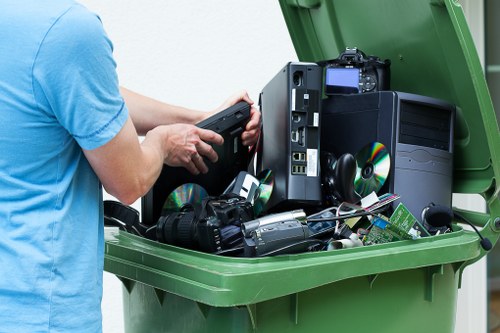
Businesses of all sizes generate waste, but their needs are not the same. A small café in a parade of shops will have different requirements from a multi-floor office, and a retail unit in a shopping street will face different collection challenges from a restaurant with limited rear access. That is why a local commercial waste service should feel adaptable rather than one-size-fits-all.
Typical customers include:
- Offices and co-working spaces
- Restaurants, pubs, cafés, and takeaways
- Retail shops, salons, and showrooms
- Industrial units and warehouses
- Construction and refurbishment sites
- Schools, nurseries, and training centres
- Health and care premises
- Property managers and managing agents
We also support landlords, facilities teams, and mixed-use developments where commercial waste disposal needs to fit alongside residential bin storage, concierge schedules, and building rules. In London flats above shops, basement premises, and shared service yards can all create access issues that are easier to manage with a local team that understands the layout of the area.
Types of commercial waste we handle
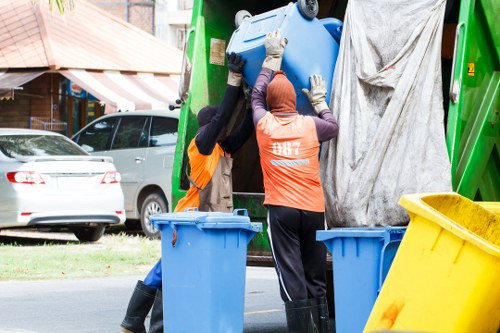
Every business produces different waste streams, and the right approach depends on what you are disposing of. Some materials can be recycled, some need regular scheduled collection, and some require extra care because of contamination, bulky size, or the nature of the item itself. A good waste provider should be able to talk through your needs clearly and help you choose the right service setup.
Common types of commercial waste include:
- General business waste
- Cardboard and packaging
- Office paper and mixed recyclables
- Food waste from hospitality premises
- Bulky waste from fit-outs or clearances
- Furniture and shelving
- Glass, cans, and other recyclable materials
- Light construction and refurbishment debris
Some businesses also need support with specific waste types that must be segregated carefully. For example, kitchens often need food waste and packaging managed separately; retail sites may generate large amounts of cardboard; and offices may need secure disposal for confidential papers. The more accurately your waste is sorted, the easier it is to arrange efficient collections and the more straightforward the process becomes for your staff.
How commercial waste disposal in London works

The best waste service is one that feels simple from the start. Most business customers want a clear process, reliable timing, and collection options that match their site. Whether you need a one-off uplift or ongoing collections, the arrangement should be straightforward and easy to manage.
A typical service often follows these steps:
- You share details about your business, the type of waste, and how often it builds up.
- A suitable service option is discussed based on access, waste volume, and collection frequency.
- Collections are arranged to fit your hours and any site-specific requirements.
- Waste is removed responsibly, with recycling and disposal handled appropriately.
- If your needs change, the service can be reviewed and adjusted.
This matters in London because many commercial premises are not easy to access at all times. Some properties have shared entrances, narrow service roads, basement storage, or restricted loading times. A local provider can plan around those realities, reducing delays and helping collections happen with minimal disruption to staff, customers, and neighbouring properties.
What is included in a professional service
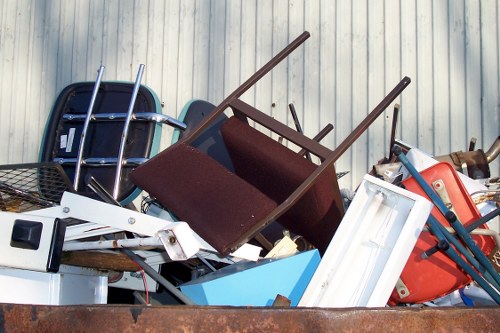
Businesses often want to know what they are actually getting when they book commercial waste disposal in London. While services can vary depending on the type of waste and collection arrangement, a proper provider should offer clear, practical support from start to finish. The aim is to remove waste efficiently while making the process easy for your team.
Depending on your needs, service features may include:
- Scheduled or one-off collections
- Waste removal from commercial premises
- Handling of mixed or separated waste streams
- Support for recycling and landfill reduction where possible
- Collections timed around business opening hours
- Advice on how to prepare materials for uplift
- Flexible arrangements for changing volumes
For many customers, the real value lies in consistency. A business that knows its waste will be collected on time can keep bins under control, avoid unnecessary clutter, and reduce the risk of overflow. That is particularly important in central areas where any waste left outside for too long can affect neighbours, pedestrians, and the appearance of your premises.
Local knowledge makes a difference in London
London is a city of contrasts. A restaurant in Soho, a studio in Hackney, a clinic in Battersea, and an industrial unit in Acton may all be within the same city, but their waste collection needs can be completely different. Local knowledge helps because it takes into account the shape of the street, the parking restrictions, the loading access, and the daily rhythm of the neighbourhood.
Areas with dense traffic and limited stopping space often need collections arranged carefully. In places like Kensington, Fulham, Clerkenwell, Greenwich, or Brixton, even a small delay can cause frustration for staff and customers. A local team is more likely to understand how to work around school runs, delivery windows, market days, and busy lunch periods. That practical awareness can save time and reduce stress.
Businesses in outer London and industrial zones also benefit from a nearby provider. In locations such as Wembley, Croydon, Tottenham, Enfield, or Lewisham, commercial sites may have larger volumes, irregular access, or shared yard areas. A flexible waste service can support these operations with collection plans that reflect real working conditions rather than forcing the business to adapt around rigid arrangements.
Why choose a local company for commercial waste disposal in London
If you are comparing waste providers, you will probably notice that reliability and responsiveness matter as much as price. A local company can be easier to work with because it understands the area, can adapt more quickly, and is more familiar with the realities of managing waste across different types of properties.
Key reasons customers choose a local team include:
- Better understanding of London access and traffic conditions
- More suitable collection times for busy commercial streets
- Knowledge of shared entrances, service yards, and basement access
- Flexible support for offices, shops, hospitality, and industrial premises
- Clear communication when collection needs change
- Practical experience with mixed-use buildings and managed estates
Local service is especially useful when your business cannot afford disruption. If your bins are overflowing before a weekend service rush, or if a refurbishment has left you with bulky waste that needs clearing quickly, a nearby team can often respond more efficiently than a distant operator. That convenience can make a real difference to day-to-day business.
Businesses that benefit most from regular collections
Some businesses need waste taken away just occasionally, while others produce enough material that regular scheduled collections are the best option. If your premises generate ongoing packaging, food waste, paper, or customer refuse, it is usually better to have a routine in place rather than relying on occasional clear-outs.
Regular commercial waste collection is often ideal for:
- Restaurants and cafés producing food and packaging waste every day
- Retail units with constant cardboard and product packaging
- Offices with paper, desk waste, and bin-room accumulation
- Salons and clinics needing tidy, discreet waste management
- Schools and training centres with steady bin use
- Shared commercial buildings with multiple tenants
Regularity helps staff keep on top of waste before it becomes a problem. It also helps maintain a cleaner environment for customers and employees, which is especially valuable in customer-facing businesses where the first impression matters. If your waste output fluctuates due to seasonal trading, events, or project work, a local provider can usually adjust the schedule accordingly.
One-off commercial clearances and bulky waste removal
Not every job is about ongoing collections. Sometimes businesses need a one-off clearance after a refit, office move, stock change, closure, or end-of-lease handover. In those situations, commercial waste disposal in London needs to be efficient, organised, and suited to the type and quantity of waste on site.
One-off clearances can help with:
- Office furniture removal
- Retail strip-outs and shelving disposal
- Restaurant equipment and back-of-house clearances
- Storage room and archive reductions
- Warehouse decluttering
- Post-renovation debris and packaging
For many customers, a clearance service is most useful when timing is critical. If you need space cleared before a new tenant moves in, before contractors start work, or before an inspection, having a straightforward collection plan can keep the process moving. In London, where access windows are often short and building managers may require advance notice, a local team is especially helpful.
Preparing your business for collection
A little preparation can make collections quicker and smoother. It also helps reduce the chance of delays or extra handling on the day. While your waste provider should be able to advise on what is needed, most customers benefit from having a simple internal routine for waste storage and presentation.
Preparation checklist:
- Separate recyclable materials where possible.
- Keep waste in the agreed collection area.
- Make sure access routes are clear.
- Remove obstacles from corridors, yards, or bin stores.
- Let staff know collection times in advance.
- Highlight any access restrictions, gates, or entry codes if relevant.
- Move sharp, heavy, or awkward items only if it is safe to do so.
In London buildings, it is also worth checking the practical details. Is there a loading bay? Does the waste need to pass through a shared lobby? Are there time restrictions for vehicle access? Is the waste store locked after hours? These details may sound small, but they can shape how efficiently the service runs. Clear information upfront helps avoid confusion and keeps things simple.
What affects pricing for commercial waste disposal
Many customers want to understand what influences the cost of commercial waste disposal in London before they request a quote. While exact prices vary by site and waste type, the main factors are usually practical rather than mysterious. The more clearly your needs are defined, the easier it is to suggest a suitable arrangement.
Common pricing factors include:
- Type of waste being collected
- Volume and frequency of collection
- Whether the service is one-off or ongoing
- Access conditions at the property
- Need for additional labour or handling
- Sorting requirements for recycling streams
- Distance and route considerations within London
It helps to be honest about what you have on site. If you are unsure whether a load is mostly cardboard, mixed waste, or bulky items, explain the situation as clearly as you can. That way the service can be matched to the actual job rather than based on assumptions. A transparent conversation at the start usually makes the whole process smoother.
Waste segregation and recycling in a business setting
More and more businesses want to reduce the amount of waste going into mixed disposal streams. That is partly about responsibility, but it also makes sense operationally. Cleaner segregation can improve site organisation, reduce overflow, and make it easier to manage different bins or collection types.
Common ways businesses separate waste include:
- Cardboard and paper kept separate from general rubbish
- Food waste collected apart from packaging
- Glass stored safely where required
- Bulky reusable items identified before disposal
- Confidential documents handled through the correct route
Good segregation is especially valuable in busy London premises. If staff know what goes where, collections can be more efficient and storage areas stay tidier. That matters in customer-facing sites, where visible waste sorting can support a cleaner, more organised appearance. It also helps property managers and business owners stay in control when multiple teams are using the same bin store.
Common challenges on London commercial sites
London commercial properties can be rewarding places to trade, but they are not always easy to service. A waste team working in the capital needs to deal with real-world issues such as limited kerb space, shared entrances, vehicle restrictions, and high pedestrian footfall. That is why experience on local streets matters.
Typical site challenges include:
- Narrow access roads and one-way systems
- Restricted loading times
- Basement storage areas
- Limited parking for collection vehicles
- Shared bin stores in mixed-use developments
- Busy trading hours and customer queues
Because of these challenges, communication is essential. If your site has unusual access or specific rules from a landlord, concierge, or building manager, those details should be shared early. A local service can then plan collection times and vehicle access more effectively, reducing the chance of disruption on the day.
Areas covered across London
Commercial waste disposal needs vary across the city, but local businesses in many districts look for the same thing: a service that is practical, responsive, and suited to their premises. We work with customers across Central, North, South, East, and West London, including busy commercial zones and mixed residential areas.
Areas commonly served include:
- Westminster, Mayfair, Soho, and Victoria
- Camden, Islington, and King’s Cross
- Shoreditch, Hackney, and Stratford
- Southwark, London Bridge, and Bermondsey
- Greenwich, Lewisham, and Canary Wharf
- Kensington, Chelsea, Hammersmith, and Fulham
- Wandsworth, Battersea, and Clapham
- Wembley, Acton, Ealing, Croydon, and surrounding districts
If your business operates in a place with shared access, managed loading bays, or tight operating hours, a local team can help shape a collection plan that fits the building and the street. That local responsiveness is often what customers value most.
How to choose the right waste service for your business
Choosing a provider is not only about getting waste removed. It is about finding a service that supports your operation, fits your premises, and works reliably in a city as busy as London. The right arrangement should save time and reduce hassle rather than creating another task for your team.
Ask yourself these questions:
- Do we need scheduled collections or only occasional removal?
- What type of waste do we produce most often?
- Is our site easy to access, or do we need a flexible collection plan?
- Do we need recycling support or separated waste streams?
- How important is after-hours or low-disruption collection?
If you can answer those questions clearly, it becomes easier to request the right solution. Many customers appreciate a service that is practical first and foremost, with clear communication and a setup that reflects the realities of their site. A good local provider should listen to your needs, explain the options plainly, and suggest a collection pattern that makes sense for your business.
Frequently asked questions
What is the difference between commercial and domestic waste?
Commercial waste comes from business premises, trades, and organisations. It includes materials produced by offices, shops, restaurants, warehouses, schools, and other non-household settings. It is usually managed separately from household waste and may need different collection arrangements.
Can collections be arranged around business opening hours?
Yes, many businesses prefer collections outside peak times or during quieter windows. In London, this is often important for customer-facing sites, loading bay access, and properties with shared entrances. A local service can usually work around your schedule more easily.
Do I need to sort my waste before collection?
It depends on the service and the type of waste. Some materials should be separated for recycling or handling reasons, while mixed waste may be collected as one load. If you are unsure, it is best to ask what preparation is needed before the collection day.
Can you help with office clear-outs and bulky items?
Yes, many commercial customers book one-off clearances for furniture, shelving, fixtures, or general site decluttering. This is especially useful during relocations, refurbishments, or end-of-lease preparations.
Why is a local London company useful for business waste?
Local knowledge helps with traffic patterns, building access, parking restrictions, and short collection windows. That can make a noticeable difference in busy parts of the city where efficient planning is essential.
How do I get started?
The easiest next step is to request a free quote and explain your premises, waste type, and collection needs. From there, you can discuss the most suitable arrangement for your business.
Book your commercial waste service with confidence
If your business needs a dependable solution for commercial waste disposal in London, choosing a local team can make the whole process easier. You get a service that understands the pressures of operating in the capital, from access restrictions and tight city streets to changing waste volumes and busy trading times.
Whether you need ongoing collections, a one-off clearance, or support with separating recyclable materials, the right service should be clear, practical, and built around your premises. That is true for offices, restaurants, retail units, industrial sites, and managed buildings alike.
Contact us today to discuss your requirements, request a free quote, or book your service now. If your business is ready to keep waste under control, a local commercial waste solution can help you do it with less disruption and more confidence.