Commercial Waste Collection in London
If you run a business in the capital, you already know that waste management is not a side issue. It affects hygiene, safety, compliance, staff productivity, customer experience, and even how smoothly your premises operate day to day. Commercial Waste Collection in London needs to be reliable, flexible, and suited to the pace of the city, whether you manage a restaurant in Shoreditch, a retail unit in Kensington, an office in Canary Wharf, a workshop in Southwark, or a mixed-use building in North London.
London businesses deal with a wide range of waste streams, tighter access conditions, busy roads, limited loading bays, and time-sensitive collections. That is why local commercial waste services matter. A provider that understands the practical realities of operating in London can help keep your site clear, reduce disruption, and make sure your waste is handled appropriately.
From recurring collections for offices and hospitality venues to one-off clearances for refurbishments, the right service should feel straightforward. You should be able to arrange a collection schedule that fits your business, understand what types of waste are accepted, and know that your bins, bags, or containers will be dealt with on time. For many local customers, that combination of convenience and consistency is exactly what makes a trusted waste partner worthwhile.
Why London businesses need a tailored waste service

Commercial waste in London is not one-size-fits-all. The city’s buildings range from compact high-street units to large corporate offices, industrial estates, markets, hospitality venues, shared workspaces, and apartment developments with commercial ground floors. Each site has different waste volumes, storage space, collection times, and access rules. A flexible service is essential because your waste output may rise and fall with trading hours, seasonal demand, staff numbers, and customer footfall.
For businesses in central areas such as Westminster, the City, Holborn, and the South Bank, access can be especially tight. Collections may need to work around traffic restrictions, delivery schedules, pedestrian zones, or limited kerbside space. In outer areas like Ealing, Lewisham, Walthamstow, Croydon, or Wembley, premises may have different layout challenges, shared forecourts, or rear service access that needs careful planning. A local team can adapt to these conditions far more easily than a service that takes a generic approach.
Another major reason London companies seek professional waste collection is compliance. Businesses have a duty to store, transfer, and dispose of waste responsibly. That includes separating certain materials, keeping storage areas safe and tidy, and using a suitable contractor for regular removal. Choosing a structured commercial waste service helps reduce the risk of missed collections, overflowing bins, unpleasant odours, pest problems, and unwanted disruption to staff or visitors.
What commercial waste collection can include

Most local businesses need a mix of waste solutions rather than a single bin pickup. A good commercial waste collection service in London can typically support routine general waste removal alongside separate streams for recycling and, where needed, bulky or unusual items. The exact service depends on the business type and how much waste is produced.
Common waste types may include office paper and packaging, food waste from restaurants and cafés, cardboard from retail stock deliveries, mixed commercial refuse, and bulky items from fit-outs or stock changes. Some customers also need support with glass, cans, plastics, and other recyclable materials. Businesses with more specific output, such as salons, clinics, or light industrial sites, may need a collection set-up that reflects the nature of their operations.
Typical commercial waste collection options in London may include:
- Scheduled collections for general business waste
- Recycling collections for cardboard, paper, plastics, and similar materials
- Food waste removal for hospitality and catering premises
- Bulky waste or one-off clearance support
- Container, bin, bag, or sack-based collections depending on the site
- Flexible collection frequencies for busy or seasonal operations
Businesses that commonly use these services
Commercial waste services are used by offices, shops, pubs, cafés, restaurants, hotels, warehouses, workshops, estate-managed buildings, schools, clinics, gyms, and shared commercial units. Even small businesses can generate more waste than expected once packaging, consumables, and customer-facing operations are taken into account. That is why many local customers benefit from having waste removed on a planned schedule rather than waiting until bins become full.
How the service works

The process is usually designed to be simple. First, the waste needs are assessed so the collection plan matches the type and volume of rubbish your business produces. Then a suitable frequency and container arrangement can be set up. In London, that might mean early-morning collections before opening hours, weekday pickups for office buildings, or more frequent servicing for hospitality sites with higher food waste output.
Once the schedule is in place, collections take place as agreed and waste is removed from the site. For many premises, this means keeping bins in a designated external area or in a service yard. For others, especially sites with limited storage, the collection may need to be coordinated with staff, building management, or concierge teams. Good communication matters because many London properties have shared entrances, restricted access, or loading windows that must be respected.
If your business changes shape over time, the service can often be adjusted. A restaurant may need extra collections during busy periods. An office may reduce waste volume after switching to digital processes. A retail unit may need additional recycling capacity during peak seasons. That flexibility is a major advantage for local companies that want waste services to fit the reality of trading in London.
What happens during a typical collection
Although sites vary, a normal collection usually follows a clear pattern: arrival within the arranged time window, safe retrieval of the waste, transfer to the appropriate vehicle, and removal from the premises with minimal disruption. The aim is to keep your business clear, avoid build-up, and make sure disposal is handled professionally.
Why local knowledge matters in London
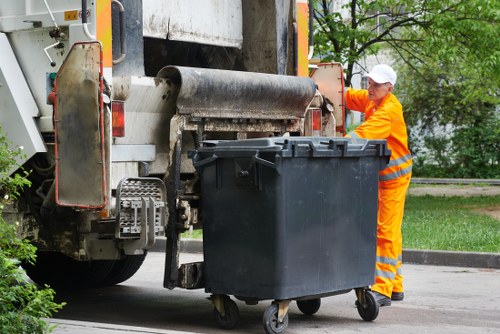
London is a city where local knowledge makes a real difference. Access can be difficult in places where roads are narrow, traffic is heavy, or parking is restricted. In some commercial areas, waste needs to be collected at specific times to avoid blocking shopfronts, disrupting customers, or conflicting with deliveries. In others, there may be shared access with residential properties, meaning the collection needs to be quiet, respectful, and well timed.
Local teams are often better placed to deal with these challenges because they understand the city’s layout and operating pressures. A business in Camden may face very different collection conditions from one in Richmond, Stratford, Islington, or Battersea. A nearby provider is more likely to know the usual bottlenecks, loading restrictions, and practical access issues that affect commercial properties in each area.
For customers, that can mean fewer delays, smoother collections, and less time spent chasing problems. It can also be helpful for properties with unusual access such as basement storage, rear alleyways, mews locations, shared courtyards, or upper-floor commercial spaces. A team familiar with London premises can plan ahead and work around the site rather than expecting the site to work around them.
Local property types that often need support
Commercial waste collection in London is often needed at:
- High-street shops and retail units
- Restaurants, cafés, takeaways, and pubs
- Offices and business centres
- Hotels and serviced apartments
- Light industrial units and workshops
- Mixed-use buildings with commercial premises on the ground floor
- Shared offices and coworking spaces
- Schools, training centres, and community buildings
Benefits of using a professional commercial waste service

Choosing a professional collection service brings practical benefits that directly affect how your business runs. A clean and organised waste area can improve site presentation, reduce odours, help staff work more efficiently, and make your premises more welcoming for customers and visitors. For customer-facing businesses, this can be especially important because overflowing bins or unmanaged waste can quickly affect the impression people get.
There is also a time-saving element. Staff members should be focused on serving customers, running operations, and keeping the business moving. Chasing bin issues, moving bags at the last minute, or finding space for waste storage can waste valuable time. A scheduled collection service helps take that burden away.
Another benefit is better control over different waste streams. Many London businesses are looking for ways to improve recycling and reduce unnecessary general waste. Separating materials where possible can make storage areas tidier and can support more efficient handling of cardboard, paper, plastic, glass, and food waste. That matters for businesses that want practical waste management, not just a basic bin pickup.
Benefits at a glance
- Cleaner and safer business premises
- Less disruption for staff and customers
- More reliable collection planning
- Better handling of different waste types
- Improved presentation for commercial sites
- Reduced pressure on internal teams
What to expect from a good provider
A dependable commercial waste collection provider should make the process clear from the start. You should know what can be collected, how often it will be removed, what access is needed, and how to prepare your waste. The arrangement should feel tailored to your business rather than forced into a standard model that does not suit your site.
Good service also means clear communication. If your opening hours change, your stock levels rise, or you have a temporary closure, it should be easy to adjust the schedule. In a city like London, where many businesses operate across multiple sites or within busy shared buildings, responsiveness can make the difference between a smooth service and a recurring problem.
Many local customers also value discretion and professionalism. Waste should be collected without creating unnecessary disturbance or leaving mess behind. The best outcome is a clean site, an efficient collection, and a service that quietly supports the business in the background. That is especially important in hospitality, retail, healthcare-adjacent premises, and managed office buildings.
Preparing for your waste collection
Preparing properly helps collections run more smoothly and can reduce the chance of missed pickups, access issues, or contaminated recycling. Even when the service is straightforward, a few practical steps can make a real difference. London premises often have limited external storage or shared access routes, so a little planning goes a long way.
Preparation checklist:
- Confirm where bins, sacks, or containers will be stored before collection.
- Make sure access routes are clear of deliveries, parked vehicles, or obstacles.
- Separate recyclable items from general waste where applicable.
- Keep food waste in the correct containers to reduce smells and pests.
- Inform building management, staff, or security teams if access will be needed.
- Check collection times so waste is ready on schedule.
- Report any special access instructions for basements, courtyards, or shared yards.
For restaurants, cafés, and food-led businesses, it is often useful to keep disposal points close to prep areas while ensuring bags and bins are sealed correctly. For offices, it helps to define which areas are used for paper, packaging, and mixed waste so staff do not place everything in one stream. Retailers may benefit from scheduled cardboard removal after deliveries or seasonal stock changes. The more clearly the waste area is managed, the more efficient the collection becomes.
Pricing factors and what affects the quote
Businesses often want to understand what influences the cost of commercial waste collection before they commit to a service. Exact prices can vary widely, so it is better to think in terms of the factors that shape a quotation. That way, you can compare service options fairly and choose the arrangement that best suits your premises and waste output.
Common factors include the volume of waste produced, how often collections are needed, the type of waste stream, the number and size of containers required, the ease of site access, and whether the waste needs handling outside standard working patterns. A site with straightforward kerbside access will usually be simpler to service than a basement unit with tight loading restrictions or a property that shares access with several other businesses.
Other considerations may include the balance between general waste and recycling, whether food waste is involved, and whether your business needs occasional extra collections during peak trading periods. This is why many London customers prefer to request a tailored quote rather than rely on a generic estimate. It gives a more accurate picture of what is needed and helps avoid paying for capacity you do not use.
Common cost influences
- How much waste your business produces
- Collection frequency
- Waste type and sorting requirements
- Container size and quantity
- Access restrictions and loading conditions
- One-off versus ongoing service needs
- Additional support for bulky or irregular waste
Areas covered across London
A strong London-based commercial waste service should be able to support customers across central, north, south, east, and west London. That includes dense business districts, local high streets, industrial pockets, business parks, and residential areas with commercial premises embedded within them. Because the city is so varied, local coverage is often as much about practical familiarity as it is about geography.
Customers in areas such as Westminster, Soho, Fitzrovia, the City, Canary Wharf, Stratford, Hackney, Clerkenwell, Battersea, Clapham, Brixton, Croydon, Ealing, Hounslow, Wembley, Barnet, Greenwich, and Wimbledon often face different collection realities. Some sites are tucked away behind busy streets. Others are in managed developments with shared service yards. In suburban locations, access may be easier but still require careful timing around school runs, commuter traffic, or local parking controls.
That broad coverage is useful for businesses operating across more than one site. If you manage multiple branches, satellite offices, or retail units, it helps to work with a provider who understands how to coordinate collections in different parts of London without complicating your operations. Consistency across sites can make waste management much easier to oversee.
Practical reasons businesses book now
Many customers do not wait until waste becomes a serious problem before arranging a service. In practice, businesses book when they need to prevent overflow, improve site appearance, manage opening pressures, or support a change in trading activity. The sooner the service is in place, the easier it is to keep waste under control.
For new businesses, commercial waste collection is often part of opening preparations. For established companies, it may be triggered by a premises move, refurbishment, change in supplier, or growth in customer demand. Seasonal businesses may also need temporary changes to their collection frequency when trade becomes busier. In each case, a local service can help keep things simple and efficient.
Request a free quote if your business needs a better fit for current waste volumes, more reliable collections, or clearer support for recycling and food waste handling. If you are comparing options for commercial waste collection in London, it is sensible to ask how the service will work at your premises, what access will be required, and how collections can be adjusted as your business changes.
Frequently asked questions
How often should a business arrange waste collection?
That depends on how much waste your business produces and how quickly it builds up. A small office may need fewer collections than a restaurant, convenience store, or busy shared workspace. Many customers start with a regular schedule and adjust it once they see how their waste output behaves in practice.
Can collections be arranged around business hours?
In many cases, yes. London businesses often need early-morning, off-peak, or tightly scheduled collections to avoid interrupting customers, staff, or deliveries. Access requirements should be discussed in advance so the service can be planned around your operations.
What if my premises has limited access?
Limited access is common in London, especially in older buildings, basement units, mews properties, and shared commercial developments. A local waste provider can usually discuss the best way to handle loading, storage, and collection timing so the service remains practical.
Do I need to separate recycling from general waste?
Where possible, yes. Separating recyclable materials can make collections more efficient and help your business manage waste more responsibly. The exact setup depends on the materials your business produces and the available storage space at your premises.
Can one service cover multiple business sites?
Yes, many companies with multiple premises prefer a coordinated waste arrangement. This can make it easier to manage schedules, track waste streams, and keep service standards consistent across London locations.
What should I do before my first collection?
Prepare the waste area, confirm access, separate materials if needed, and make sure staff know where waste should be placed. If your building has a concierge, security team, or property manager, it helps to keep them informed as well.
Why choose a local commercial waste company in London
There are real advantages to working with a local company for your business waste. Local teams are usually better at responding to short-notice changes, understanding neighbourhood restrictions, and handling the practical challenges that come with operating in a city as busy and varied as London. They are also more likely to appreciate the realities of city-centre access, congestion, service yards, and shared building rules.
For customers, that means less guesswork and more dependable service. Whether you operate from a small shop, a multi-floor office, a restaurant group, or a managed property, the best arrangement is one that feels easy to maintain. Waste should not be a recurring source of stress. It should be a background service that quietly keeps your business running smoothly.
Contact us today to discuss your business waste needs, arrange a suitable collection plan, or request a free quote for your premises. If you are looking for dependable commercial waste collection in London, a local service can help you keep things clean, organised, and efficient without unnecessary disruption.
What makes this service practical for real London customers
Local commercial customers often need more than a simple collection drop-in. They need a service that respects building rules, trading patterns, access limitations, and busy urban conditions. That is especially true in London, where even straightforward waste collection can become complicated if the timing, routing, or storage arrangements are not thought through properly.
Practical service means being able to work with offices that operate core hours, restaurants that generate food waste daily, retail units that need cardboard cleared after stock deliveries, and mixed-use buildings that have to balance residents and commercial tenants. It also means understanding that the same business may need different support across the year. A winter schedule may not suit summer demand. A shop refurbishment may create a temporary spike in bulky waste. A new café may need more frequent emptying during launch month.
That is why local customers value clear, flexible arrangements. They want waste removal that supports the business instead of adding to its workload. They want collections that are dependable, tidy, and adapted to the premises. And they want a provider that understands London as it is: busy, varied, and always moving.
Ready to arrange commercial waste collection?
If your business needs reliable waste removal, now is a good time to plan a collection service that suits your site and schedule. Whether you are looking for regular business waste pickups, recycling collections, food waste support, or a more flexible arrangement for a busy premises, the right local team can help.
Book your service now or request a free quote to get started with a collection plan built around your London business. A straightforward, well-managed waste service can make a noticeable difference to day-to-day operations, site appearance, and staff efficiency.
When you are ready, choose a service that understands your area, your property type, and the pace of London business life. That is what makes commercial waste collection in London a practical asset rather than just another task on the list.